Ramin Daqiq.

Ramin Daqiqda·qiq (دقیق) — precise, exact

Software Engineer · 8+ years · The Hague, NL

I learned to build software where nothing could be taken for granted — electricity, internet, budgets. Constraints like that teach you to keep systems simple, pick tools that survive the real world, and think about the person on the other end. Eight years on, that's still how I work — now from The Hague.

Java · Spring Boot · Node.js/Express · React · Next.js · Angular · TypeScript · Flutter · Elasticsearch · Kubernetes · Azure · CI/CD · IoT

Experience

01

Backend that stays up

Java/Spring Boot and Node.js services on Kubernetes — APIs, auth, Elasticsearch-backed search, migrations, plus the discipline around them: monitoring, alerting, and being on the other end when something breaks at a bad hour.

02

Frontend in real time

React/Next.js and Angular in TypeScript, including collaborative editing built on CRDTs — documents several people write at once without losing a word. Frontend work that is really distributed-systems work in disguise.

03

Mobile for hard places

Flutter apps built offline-first for users where connectivity is a luxury. Geofenced alerts, push notifications, background sync.

04

Teams that ship better

Onboarding that takes hours instead of weeks, CI/CD pipelines that keep diffs clean, code review and mentoring.

Afghanistan Remote Sensing Initiative

Sensors in, alerts out

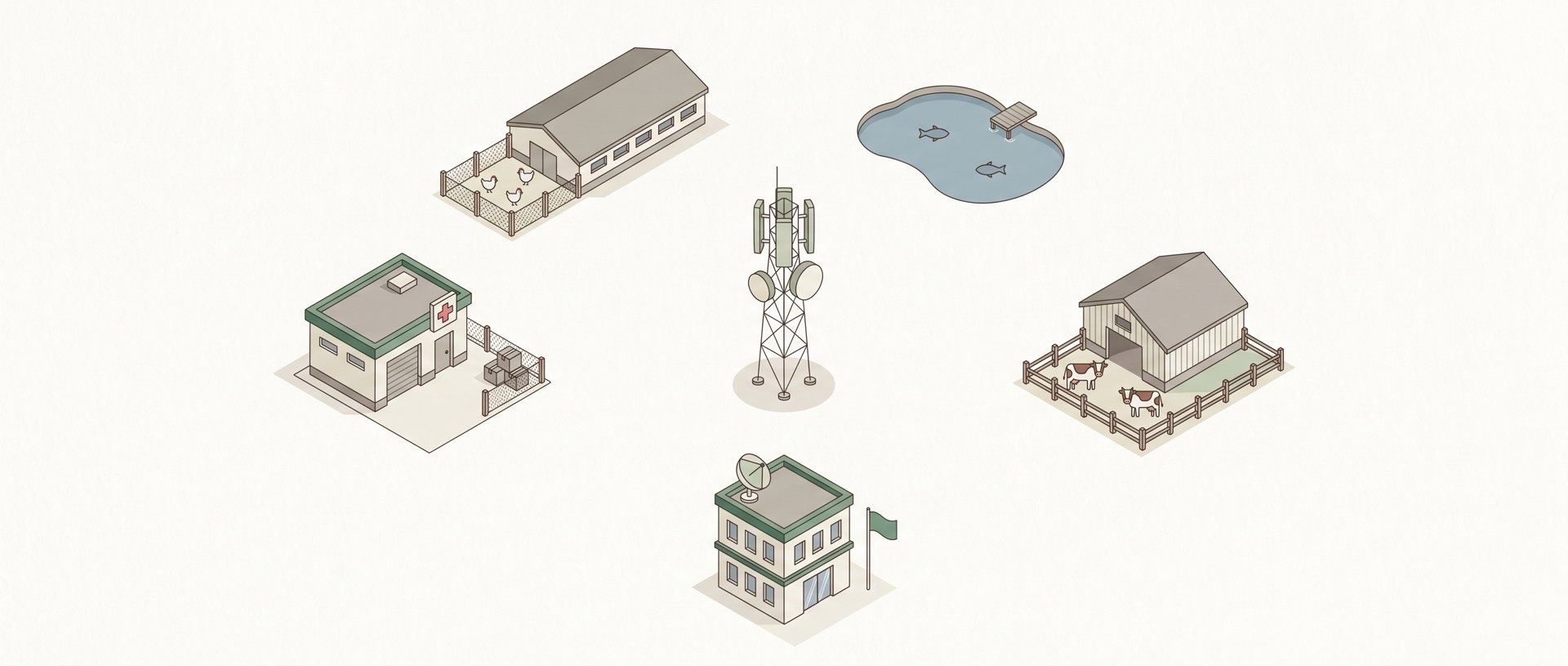
On ARSI we monitored remote project sites in real time — starting with provincial pharmaceutical stores, where temperature, light, humidity and after-hours movement decide whether stored medicine keeps its quality. Broiler farms, fisheries and cattle farms were next on the list.

Limited resources shaped the whole design. Commercial monitoring systems were expensive and assumed infrastructure that wasn't there, so we built each node ourselves: an Arduino with individual sensors, a fraction of the cost. Cloud dashboards and push notifications assume reliable internet, so alerts travelled by SMS gateway instead — any network, any phone. It wasn't my first project, but it's the one that showed me how far technology can stretch on scarce resources.

A simulated day on that network — sites detect, the gateway texts the duty phone, and every signal is visible at HQ, hundreds of kilometres away, within seconds:

Illustrated ARSI-style remote sites: a pharmaceutical store, a broiler chicken barn, a fish pond and a cattle barn arranged around a central GSM tower
GSM network
HQ · Kabul — web app + duty phone
SMS · duty phone+93 •• ••• ••41
Web app · HQ, Kabul0 signals

Selected work

Incident Management System — Ministry of Public Health

iMMAP → WHO · 2018–2021 · Kabul

A nationwide system for the Ministry's Command & Control Center, tracking every major incident in Afghanistan — explosions, fires, road-traffic accidents, avalanches, drought — together with the list of people affected by each one. I built it at iMMAP for the World Health Organization, then joined WHO to maintain and extend it for the next three years: full-stack features in Angular, Node.js and Spring Boot, real-time dashboards for decision-makers, scripted automation, and training for health-facility staff.

Where technology helpedThis was the government's single source of truth for recognising the people affected: when an explosion or disaster struck, financial support to victims' families was decided from this system's records. It ran across all 34 provinces until the fall of the government in 2021.

Angular · Node.js · Spring Boot · real-time dashboards · Python / PowerShell automation

CHDC — Conflict & Humanitarian Data Centre

INSO · 2021 – present · The Hague

INSO's incident-data platform: conflict and security incidents recorded, searched and analysed by humanitarian NGOs across 28 countries. I started on core incident features — advanced geospatial and narrative search on Apache Solr, CouchDB conflict resolution — and now serve as technical lead: owning the review-and-merge gate across two Angular apps and a seven-module Spring Boot backend, and running the production infrastructure on Kubernetes/Azure.

Where technology helpedSafety teams use it to understand the environment their staff operate in — what is happening around them, where, and how it is trending — and plan field operations accordingly. One searchable source instead of scattered reports, for NGOs in 28 countries.

Angular · Spring Boot / Java 17 · Apache Solr · CouchDB · Kubernetes / Azure

INSO Alerts — mobile app

INSO · 2022 – present · App Store & Google Play

INSO's real-time security alerts used to reach NGO staff by email and SMS. The app — which I built as primary developer from the first commit — extended that channel: push notifications, a map view, proximity-radius filters and polygon geofencing, offline support for low-connectivity areas, and OAuth2 sign-in. Part of the same service as app.ngosafety.org.

Where technology helpedAn aid worker's phone now buzzes with the alerts that matter for where they actually are — filtered by area and proximity on a map, instead of a one-size-fits-all email blast — and the app keeps working where connectivity is thin.

Flutter / Dart · Firebase push · Google Maps geofencing · offline-first (Hive) · OAuth2
Get in touch

Based in The Hague. The quickest way to reach me is email.

Most of my code lives in private repositories — professional work on Azure DevOps, and several personal projects too — so my public GitHub shows only a small slice.